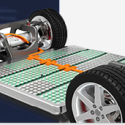
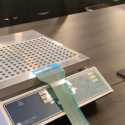
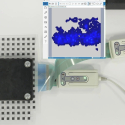
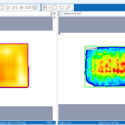
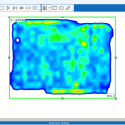
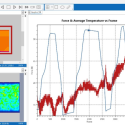
This post is part of our ongoing series on spatial pressure and temperature mapping in electric vehicles. While earlier posts focus on battery packs, here we take a broader view across the vehicle. Battery packs dominate most conversations around spatial pressure and temperature mapping — and for...

Calibration matters: getting your temperature map right unlocks the full value of the system. Accurate temperature mapping depends on more than sensor resolution—it depends on calibration. In systems that measure pressure and temperature simultaneously, even small temperature offsets can influence...

Getting reliable data: how to separate signal from noise when measuring pressure + temperature. Spatial mapping of pressure and temperature is a powerful tool, but only if you trust the data. Real manufacturing and test environments bring noise: mechanical vibrations, thermal drift, sensor drift...

The edges of battery cells are often where the story begins. In battery manufacturing and module integration, one of the often-overlooked aspects is the edge region of a cell, where tabs, welds, adhesives, frames, or busbars join the cell body. In many failure cases or design optimizations...

In EV battery manufacturing, the pressure that individual cells experience inside a pack tells a powerful story. Some variation is both expected and benign: cells settle, tabs flex, thermal expansion occurs. But when early mechanical failure modes begin to emerge, such as gas-induced swelling...

Temperature is one of the most common measurements in everyday life and is familiar to everyone. In scientific, industrial, and engineering fields, accurate measurement of surface temperature is essential for effective monitoring, diagnostics, and process control. A variety of technologies have been...